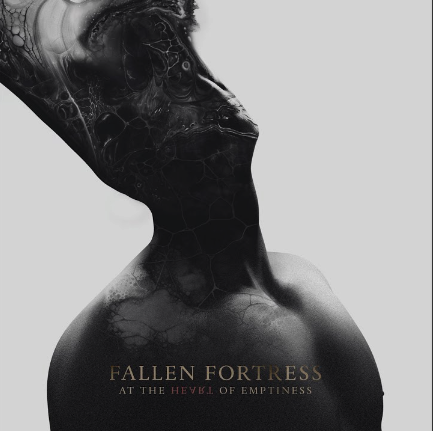
Fallen Fortress: “At The Heart of Emptiness” (2025)
Cargando



Por Pablo Rumel.
Una fortaleza caída en el corazón del vacío: metal extremo sin concesiones
At The Heart of Emptiness no busca convencer a nadie con fórmulas gastadas ni discursos grandilocuentes. Desde su primer corte, Fallen Fortress construye una experiencia sonora que apela más al descenso interior que al mero headbanging. Estamos ante una obra que exige escucha activa, inmersión total, y que rehúye las etiquetas fáciles: tenemos un viaje sordo, barroco y violento a través de la angustia, lo espectral y la brutalidad, sin concesiones para el oyente casual.
El disco abre con «Intro», un corte de un minuto y medio con sonidos que sugieren la ultratumba, lo fantasmal, lo perecedero; son acordes lentos adosados a una guitarra solista que dibuja con notas sostenidas y calmas el pórtico que deberemos atravesar ¿abandonando toda esperanza? Como una carga activada desde lo más hondo de los abismos, arrancamos, ahora sí con «Dehumanized», riffs cayendo como cascadas, unos tras otro, en un rápido vendaval de bombos, cajas y platillos.
La voz de Diego Quiroz es sublime, sobresale de aquel caos sónico de acordes atronadores. Hay secciones de blast beat amortiguadas por elegantes teclados, aunando brutalidad con refinamiento. Hay un uso calculado de armónicos artificiales ejecutado por los guitarristas, imprimiendo un sello de hierro entre intervalos, con leves descensos en los tempos a velocidades medias. Vuelvo a poner énfasis en la voz de Diego: no se fija en un solo registro, va de agudos guturales, pasando por tonalidades graves de ultratumba e incluso registros punketas de viejo cuño, escuela violenta, más cercana a una cuchilla oxidada envuelta en una tela que a un rincón playero con skaters.
En «This Too Human» experimentamos un registro diferente: las púas se aceleran en el arranque, creando atmosferas gélidas, zumbidos hipnóticos, con una base bajo-batería que golpea con fuerza esta aceleración sónica, incluyendo velocísimos redobles de caja y calculados cambios de marcha. No hay duda, el viaje es amargo, no hemos llegado hasta acá para oír un chachachá o las bondades de la vida, sino para apreciar movimientos musicales que conjugan impotencia, grito y melodía. La potencia vocal da para un artículo aparte: no solo oímos growls de diversas magnitudes, con matices agudes, graves y vibración de pliegues vestibulares inhumanos, hay timbres secos, entrecortados, lamentaciones tipo cryng. El repertorio es amplio.
Se trata del corte más largo y uno de los más disfrutables del disco, con progresión y acumulación de diversas figuras; hay momentos de calma y de angustia, pero más que un cúmulo de emociones, acá se proyecta un viaje sonoro barroquizado, echando a la basura las estructuras manidas y avanzando con cuerdas de acero y artillería pesada en las miasmas de lo desconocido: sigue siendo el metal de toda la vida, pero sonando a niveles superlativos, sin lugares comunes.
Llegamos a «—», sí, leyó bien, «—», un guion, o acaso una resta, o por qué no, la negación, acaso un silencio. No, no es un silencio, son 45 segundos de teclados, una sección breve que recuerda a esos pequeños interludios de los viejos maestros metálicos, esos que no usaban chasca larga ni chaquetas de cuero (Debussy, Franz Liszt o Satie), pero que ejecutaban piezas melancólicas que investigaban el lado funesto del ser humano: con largos acordes sostenidos y sin florituras.
En «Fake Glory» una vez llegamos a un tema con molde black metalero. Vuestro servidor le hace el quite a las etiquetas, sirven, sin duda, pero existe un glosario amplio de términos concretos para describir de forma objetiva a la música: veloces ráfagas de batería, secciones de notas rápidas adornadas con teclado, y todo envuelto en ese aire gélido creado por las bandas nórdicas. Sabemos que el black remite al hielo, a la nevazón eterna, pero acá incluso hallamos riffs sincopados construido a base de notas pedales y cuerdas al aire con notas disonantes. En la mitad de la pieza las aguas se ralentizan y entramos a una nueva sección con una arquitectura más pesada y oscura, pero también más majestuosa, que se transmite en cada nota.
No hay descanso, y como un cross a la mandíbula, «The Source» arranca con ataques de guitarra inmisericorde; la batería, al mando de Daniel Delgado, se luce rompiendo los compases clásicos y ejecutando quiebres y cambios de velocidades sin dejar rastrojos ni ripios en el camino: la música ya no la seguimos con la cabeza o moviendo las piernas, nos exige más, nos exige el cuerpo y la atención completa. Si los músicos lo entregan todo, también se pide al oyente la máxima atención; hay texturas, hay artificios, pero también acoples orgánicos al servicio de una música dinámica que jamás se siente creada en una computadora o con algoritmos, sino con las entrañas y el sudor de sus creadores.
Llegamos a «The Darkness That Dwells Forever». Uf, título decidor por donde se le mire. No hemos hablado del bajo, con Christofer Oros al mando, y esta omisión responde a la dirección musical de la banda, la cual ha decidido potenciar el sonido atronador de la música sumando más peso desde las cuatro cuerdas, dejando pocas secciones donde el instrumento es más audible. Sin embargo, en los minutos finales se puede escuchar con más cuerpo y brillo, ganando más protagonismo en «Blinded», con líneas que se integran con mayor claridad al inicio, entre los acordes disonantes que planean sobre los primeros compases.
Hemos llegado pues, a la última pieza, y como cierre se ha escogido una composición veloz que pone contra las cuerdas a los grandes titanes del death-black, como Dissection, Nocturnus o Master Hammer; sí, primero porque son homenajeados con parajes oscuros y zonas atmosféricas, segundo porque son igualados en cuanto a inventiva y propuesta sonora, y tercero, el último movimiento, porque son superados y tumbados contra la lona, con una inmejorable calidad de sonido y una ingeniería perfecta que no falla nunca, obra y gracia de mister Andrew Oswald, estadounidense con amplia trayectoria en bandas metálicas.
La propuesta de Fallen Fortress con su At The Heart of Emptiness no se limita a una suma de riffs, blast beats y growls. Es una obra íntegra, que se planta con orgullo en el terreno del metal extremo mundial, pero que sabe tomar riesgos y bordear los linderos de la música culta, la poesía oscura y el caos calculado. Lo suyo no es copiar un molde: es destrozarlo y rehacerlo con metralla, teclas fantasmales y guitarras como látigos. El resultado: un disco sin puntos débiles, que pone a la banda en una liga mayor, en la que el cuerpo, el intelecto y el oído deben responder con total entrega.
Fallen Fortress: At The Heart of Emptiness (2025)
A fallen stronghold at the heart of the void: relentless extreme metal
At The Heart of Emptiness isn’t here to persuade anyone with tired formulas or grandiloquent speeches. From its very first track, Fallen Fortress constructs a sonic experience that leans more toward an inner descent than mere headbanging. This is a work that demands active listening, total immersion, and resists easy labels: it’s a deaf, baroque, and violent journey through anguish, spectrality, and brutality—offering no concessions to the casual listener.
The album opens with «Intro», a ninety-second track filled with sounds that evoke the afterlife, the ghostly, the perishable. Slow chords are paired with a lead guitar that paints the gateway we must pass through with sustained, calm notes. Are we to abandon all hope? Like a charge detonated from the depths of the abyss, we are thrown headfirst into «Dehumanized»—riffs crash like waterfalls in a furious whirlwind of double bass, snare, and cymbals.
Diego Quiroz’s voice is sublime, rising above the sonic chaos of thunderous chords. There are blast beat sections softened by elegant keyboards, merging brutality with sophistication. The guitarists make calculated use of pinch harmonics, branding iron across intervals, with subtle dips into mid-tempo territory. Again, Diego’s vocals deserve emphasis: he doesn’t settle into a single register, shifting from high-pitched growls to cavernous lows, even invoking an old-school punk grit—less like a beachside skater anthem and more like a rusty blade wrapped in cloth.
In «This Too Human», we encounter a shift in tone: the picking speeds up at the start, crafting glacial atmospheres and hypnotic hums, anchored by a bass-drum backbone that slams into this sonic acceleration with power—rapid snare rolls and precise gear shifts abound. There’s no doubt: the journey is bitter. We’re not here for a mambo or life’s blessings, but to witness musical movements that fuse helplessness, scream, and melody. The vocal power alone merits a dedicated article—not just for the variety of growls with their high, low, and vestibular fold-shredding textures, but also for the dry timbres, clipped phrasings, and crying laments. The range is vast.
It’s the longest and one of the most satisfying tracks on the record, with progression and accumulation of diverse motifs. There are moments of calm and anguish, but more than just emotional range, it projects a baroquely textured sound journey, tossing away worn-out structures and marching forward with steel strings and heavy artillery into the miasma of the unknown. This is still metal at its core—but elevated, never falling into tired formula.
We reach «—». Yes, you read that right: «—», a dash. Or perhaps a subtraction, or maybe a negation, a silence? No—it’s not silence. It’s forty-five seconds of keyboards, a brief interlude reminiscent of the metallic masters of old—those who never sported long hair or leather jackets (think Debussy, Franz Liszt, or Satie), yet composed melancholic pieces probing the grim side of human nature with sustained chords and no ornamentation.
With «Fake Glory», we enter black metal territory. Labels are necessary and useful, but it’s not good to overuse them, but there’s a wide glossary of concrete terms better suited to describing music objectively: rapid-fire drumming, high-speed note runs laced with keys, all enveloped in that icy atmosphere forged by Nordic bands. We know black metal conjures images of frost and eternal snowfall, but here we also find syncopated riffs built from pedal tones and open strings playing dissonant notes. Midway through the song, the waters slow, ushering in a new section—heavier, darker, but also more majestic, transmitting this grandeur in every note.
Like a jab to the jaw, «The Source» launches with merciless guitar assaults. Daniel Delgado’s drumming shines, breaking away from classic time signatures with rhythmic shifts and tempo changes that leave no loose threads. The music no longer invites simple headbanging or toe-tapping—it demands full-body presence and absolute attention. If the musicians give it their all, so must the listener. There are textures and flourishes, yes—but also organic fusions serving a dynamic music that never feels computer-generated or algorithm-born. This is forged with guts and sweat.
We arrive at «The Darkness That Dwells Forever». Whew—what a title. We haven’t yet mentioned the bass, commanded by Christofer Oros. This omission mirrors the band’s musical direction: enhancing the thunderous sound by adding weight from the four strings, leaving few sections where the instrument cuts through. But in the final minutes, the bass emerges with more clarity and brightness, gaining presence in «Blinded», with lines that stand out from the start, soaring over the dissonant chords of the intro.
And so we reach the final piece—a fast-paced closer that puts the great death-black titans on the ropes: Dissection, Nocturnus, or Master’s Hammer. First, because they are honored through shadowy passages and atmospheric layers. Second, because they are equaled in sonic ambition and creativity. And third—and perhaps most strikingly—because they are surpassed and knocked to the floor, thanks to flawless production and unmatched sound quality, the handiwork of Andrew Oswald, an American engineer with a long-standing reputation in the metal scene.
With At The Heart of Emptiness, Fallen Fortress doesn’t merely offer a collection of riffs, blast beats, and growls. This is a complete work, proudly planted in the terrain of global extreme metal, but unafraid to take risks and brush against the edges of art music, dark poetry, and calculated chaos. Their goal isn’t to copy a mold—it’s to obliterate it and reconstruct it with shrapnel, ghostly keys, and guitars like whips. The result: a record without weak points, placing the band in a higher league—one where the body, mind, and ear must all surrender in full devotion.
Este artículo ha sido visitado 385 veces, de las cuales 1 han sido hoy

 Megadeth, «Megadeth» (2026)Por Pablo Rumel. Último disco de Megadeth. Homónimo, como rúbrica final en medio del caos. Tatuaje…
 KREATOR «KRUSHERS OF THE WORLD» (2026)Cristian Salgado Poehlmann El que a estas alturas espere algún tipo de sorpresa o revelación en…
 UNBLESSED – MURDERING HOPE (2021 y 2025)Cristian Salgado Poehlmann Muchos cuerpos han pasado bajo el puente del cual se sostiene la extensa…
 Kuervos del Sur – De la luz (2023) Por Francisco Quevedo. Cualquiera con aires de exigente y con ánimos de jorobar, podría haber dicho que el sexteto Kuervos…
 Mark Farner vuelve al Caupolicán: 27 de abril (2024) El legendario líder, guitarrista, cantante y compositor de Grand Funk Railroad, vuelve a Chile para interpretar los grandes clásicos de…
 Beherit confirma debut histórico en Chile (2025) La banda finlandesa llegará por primera vez a nuestro país con un concierto único. En mayo serán testigos de una…
 Brujería regresa con gira en Chile y Sudamérica La banda mexicoestadounidense de death metal/grindcore volverá para interpretar de forma íntegra el icónico disco que está celebrando 30 años…
 Chester Bennington por siempre vivo El artista que se hizo mundialmente famoso por ser el vocalista de Linkin Park se quitó la vida en 2017,…
 Megadeth, «Megadeth» (2026)Por Pablo Rumel. Último disco de Megadeth. Homónimo, como rúbrica final en medio del caos. Tatuaje apocalíptico, circo…
 Terror Society se suma al regreso de David Ellefson a Chile como banda nacional invitadaLa agrupación nacional será la encargada de entregar la previa a este evento único en donde fanáticos del…
 Stoner Fest confirma su segunda edición en Chile encabezada por la banda estadounidense The AliveEl potente festival, que realizó su primera edición en el año 2011, traerá en esta ocasión a The…
 Música a Ras De Cerro (M.A.R.C Fest) realiza con éxito su segunda edición (2026)MÚSICA A RAS de CERRO (M.A.R.C. fest) es un festival que une entorno natural y música en vivo,…KREATOR «KRUSHERS OF THE WORLD» (2026)Cristian Salgado Poehlmann El que a estas alturas espere algún tipo de sorpresa o revelación en un disco…