


Por Pablo Rumel
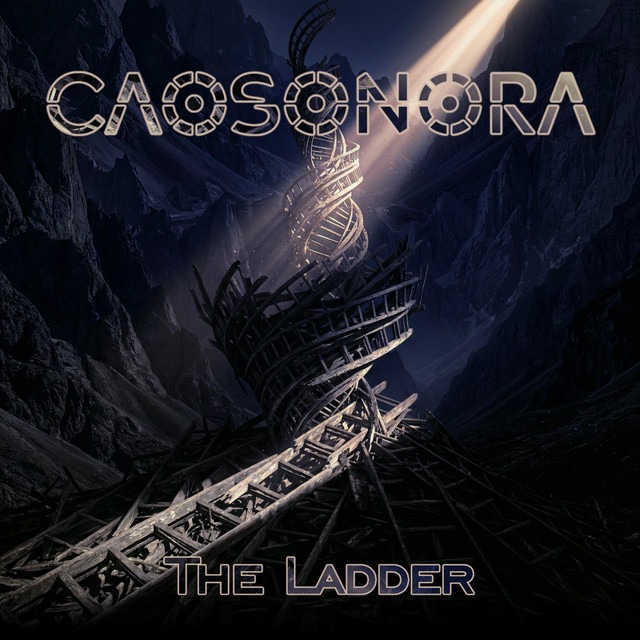
The ladder is a universal symbol tied to knowledge: ascend it, and you draw closer to heaven, purity, and divinity; descend into the underworld, and you enter the realm of the unknown and the hidden. Axis of the world, dislocated spiral of universal contradiction, the artwork behind the new record by Caosonora strongly evokes the existential complexity of humankind itself, a fusion of beast and angel, as William Blake once suggested: within us lies the necessary marriage between heaven and hell, resonating with the Taoist notion of opposing forces.
That contradiction stands as one of the central ideas explored throughout this new offering from the Chilean-German outfit Caosonora, a Europe-based band with a decade-long trajectory, three EPs under their belt, and a string of singles that have already served as undeniable proof of talent. Their music bears a distinctive identity, moving through different styles without fully belonging to any of them, though at its core beats a metallic heart, pumping its sonic machinery with steel-like force and precision.
Caosonora opens the record with “The Ladder,” kicking things off through a barrage of heavy drum rolls that resemble the footsteps of a titan — or some gigantic entity — advancing through the fog. The rhythmic work is drenched in groove, tragic and epic in spirit, recalling the more esoteric side of Mastodon, with measures that lock tightly onto rhythmic phrasing, hammering transitions beneath crashing cymbals and forceful use of the remaining percussion between chorus and bridge. It is a track that emphasizes both impact and hypnosis, a metronome transformed into a pendulum, functioning perfectly as an opening statement.
The vocal work of Salvador Manríquez provides the defining signature. He could have chosen deep growls, as he did in previous material, or thunderous high-pitched screams, yet instead he opts for clean mid-range tones: a voice calibrated for progression and disorder alike, luminous and melodic, capable of moving masterfully through subtle rasp and grit, expanding its body without ever bursting the listener’s eardrums, much like Baroness frontman John Baizley. He stretches phrases without breaking them, articulates them with remarkable breath control while never losing air, and dramatizes each verse without descending into melodrama.
The second track, “Empty Spaces,” leans toward a more Sabbathian and stoner-driven direction, opening with a dragging, slow-moving riff that gradually accelerates through successive cycles, unfolding among harmonics, bursts of speed, and slower serpentine phrases. Ascending and descending lines suddenly emerge, propelled not by sheer machine-gun velocity but by a firm, sustained pulse, while the percussion freely incorporates rhythmic variants drawn from dembow and reggaetón; a heavy, repetitive beat that, rather than inviting dance, inserts itself as an anomaly within the record’s metallic architecture.
And while previous tracks explored stoner and groove-oriented territories, “Der Doppelgänger” shifts toward introspection, driven by deeply resonant and pronounced bass lines that reinforce the melodic textures through subtle arrangements designed to strengthen the atmosphere. German musician Jon Brandel delivers outstanding guitar work here, assembling and dismantling conventional chord structures while moving across the fretboard between power chords and lightly distorted arpeggios. Near the track’s conclusion, the shriek of amplifier feedback is used almost ceremonially to reinforce the tragic dimension the song seeks to convey.
“Blank Space” opens with a hip-hop-inflected approach and partially rapped vocal phrasing, without ever abandoning the metallic shell that defines the band’s sound. Atmospheric passages with a strong progressive impulse remain present throughout, spiraling and disruptive riffs accompanied by a rhythmic foundation that shifts between polyrhythms and fractured structures, while urban rhythmic accents reinforce the album’s attitude of creative freedom and fusion. The band ventures into rocky terrain, yet does so with unwavering pulse and clarity of vision. As a gateway into understanding Caosonora’s proposal, this track is particularly effective.
“Omphaloskepsis” (literally “navel-gazing”) serves as the closing piece and perfect finale, built upon repetitive chords that mark time in hypnotic fashion while gradually drifting into hard-rock territory amid blurred lead guitar lines soaked in flanger-like effects and dense percussive groove. The vocals mirror those same rises and falls dictated by the song itself, delivering lines with restrained fury that erupts at the end of each verse, carrying a strong undertone of irony.
The Ladder totals 22 minutes and three seconds spread across five tracks that explore, in multifaceted fashion, contradiction and the imperfection inherent to all human existence. Caosonora does not seek to solidify a formula or repeat the safe conventions of progressive metal; instead, it pushes against those limits, incorporating external elements and crossing territories that could easily collapse under the weight of their own ambitions. Yet there are no visible seams here, no forced grafts. The band succeeds in making every deviation converse naturally with the whole, constructing a heavy, organic work in constant motion. Some bands consolidate a style; others expand its possibilities. Caosonora, at least on this record, seems firmly committed to the latter.

Reseña de Caosonora: “The Ladder” (EP 2026)
La escalera es un símbolo universal que se relaciona con el conocimiento: si asciendes, te acercas al cielo, a la pureza y a la divinidad; si bajas hacia el subsuelo te adentras al mundo de lo desconocido y lo oculto. Eje del mundo, espiral dislocada que representa la contradicción universal, el arte del disco que presenta Caosonora tiene fuertes reminiscencias a la complejidad de la vida misma, sobre todo de nosotros como especie; embutidos de bestia y ángel, como diría el místico William Blake, somos el necesario matrimonio entre el cielo y el infierno que tan bien conecta con la idea taoista de los opuestos.
Y aquella contradicción es uno de los conceptos que explora esta nueva propuesta de los chileno-alemanes Caosonora, banda radicada en Europa con diez años de trayectoria, tres EPs publicados, y un conjunto de sencillos que han servido como muestra innegable de talento, banda con un sello particular que atraviesa diferentes estilos pero sin encajonarse en ninguno, pero que en su axis, en su matriz, late un corazón metálico que bombea con presión y precisión de acero su maquinaria sonora.
Caosonora arranca su propuesta con «The Ladder», marcando el inicio con una descarga de redobles pesados, imitando los pasos de un titán o un ser gigantesco avanzando por la niebla: el trabajo rítmico está cargado de groove, su vibra es trágica y epopéyica, como el Mastodon más esotérico, con compases que agarran con fuerza los fraseos rítmicos, machacandolo los quiebres al son de crashes, con uso contundente del resto de los platillos entre el estribillo y el puente; es una canción que remarca la contundencia y también lo hipnótico, un metrónomo devenido en péndulo y que funciona de manera perfecta como pieza de entrada.
El trabajo vocal de Salvador Manríquez otorga el sello distintivo: pudo optar por growls profundos-como lo hizo en alguna pieza pasada- o agudos atronadores, pero opta por tonos limpios y medios, una voz calibrada para la progresión y el desaliño, una voz luminosa y melódica que sabe transitar con maestría entre ligeras entonaciones ríspidas, expandiendo su cuerpo sin llegar a reventar los tímpanos, como lo haría un John Baizley de Baroness: alarga la frase sin romperla, la vocaliza con un excelente control de respiración sin perder el aire, y dramatiza los versos sin caer en el melodrama.
El segundo corte, «Empty Spaces», opta por una vertiente más sabbathiana y stoner, con un riff marcado de entrada, arrastrado y lento, que en sucesivas vueltas agarra velocidad y se despliega entre armónicos, aceleraciones y fraseos más lentos, serpenteantes, entre líneas ascendentes y descendentes que de pronto emergen con una velocidad no afiatada a la metralla, sino al pulso firme y sostenido, con parajes percusivos sin miedo a introducir variantes rítmicas del dembow y del reggetón, un beat pesado y repetitivo que más que invitar a bailar, se introduce como una anomalía a la arquitectura pesada y metalera.
Y si tuvimos cortes stoners y grooveros, la estrategia con «Der Doppelgänger» se inclina a lo introspectivo, con lineas de bajo marcadisimas y retumbantes, reforzando las texturas melódicas con pequeños arreglos que trabajan para reforzar la atmósfera, con un trabajo del alemán Jon Brandel en las cuerdas reconcentrado, jamás plano, pues desarma los acordes convencionales y recorre por el mástil entre acordes de quinta y arpegios levemente distorsionados, utilizando casi el cierre el pitido de un acople para reforzar el efecto trágico propuesto.
«Blank Space» tiene un arranque cargado al hip-hop, y algunos fraseos vocales rapeados, sin abandonar el envoltorio metalizado que caracteriza la sonoridad de la banda: siguen presentes los parajes atmosféricos con fuerte vocación progresiva, entre riffs espiralados y rompedores, acompañados por una base rítmica que discurre entre la polirritmia y los quiebres, con notas rítmicas urbanas entremedio que refuerzan la actidud de libertad creativa y de fusión de Caosonora: se adentra a terrenos pedregosos pero con pulso firme y claridad de ideas. Esta canción es perfecta para adentrarse en la propuesta de los chilenos-alemanes, y no por nada fue escogida como single y videoclip.
Omphaloskepsis, o en español, mirarse al ombligo, es la pista final y perfecto cierre, con acordes repetitivos que marcan el paso de manera hipnótica, pero con una soltura que avanza hacia parajes hard-rockeros, entremedio de líneas solistas de guitarra difuminadas entre efectos tips flangers y el fuerte groove percusivo. La voz experimenta esas mismas subidas y bajadas que la canción dispone, vocalizando las líneas con una rabia contenida que explota al final de cada verso, con mucho dejo de ironía.
The Ladder suma 22 minutos y tres segundos repartidos en cinco temas que exploran, de manera poliédrica, la contradicción y la imperfección inherente a todo lo humano. Caosonora no busca afianzar una fórmula ni repetir los lugares seguros del metal progresivo: tensiona sus límites, incorpora elementos externos y atraviesa terrenos que muchas veces podrían derrumbarse bajo el peso de sus propias ambiciones. Pero aquí no hay costuras visibles ni injertos forzados. La banda logra que cada desvío dialogue con el conjunto, levantando una obra pesada, orgánica y en constante movimiento. Algunas bandas consolidan un estilo; otras expanden sus posibilidades. Caosonora, al menos en este disco, parece decidida a lo segundo.
Este artículo ha sido visitado 126 veces, de las cuales 1 han sido hoy




Más del autor
 THE HAUNTED – SONGS OF LAST RESORT (2025)Por Claudio Miranda Son 30 años cerrados los que The Haunted lleva reflejando el momento que…
 MASTERPLAN -METALMORPHOSIS (2026)Por Pablo Rumel Séptima larga duración de los alemanes: en líneas generales se trata de un…
 PEÑABULL -AGONÍA DE VIDAS PASADAS (2026)Por Pablo Rumel Originaria de Chillán, Peñabull es una banda chilena que rescata la esencia más…